


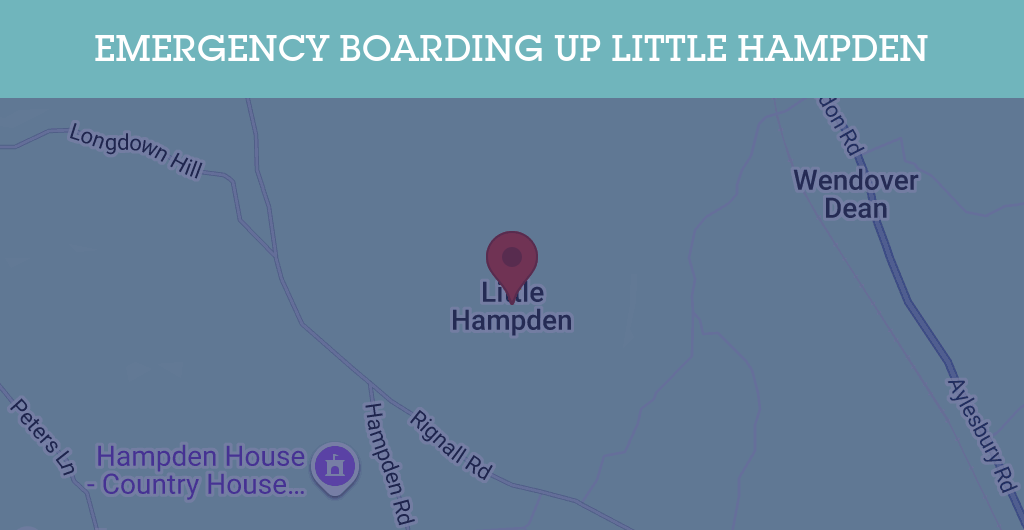
Boarding Up Little Hampden (HP16)
If you’re dealing with a smashed window, a forced door, or a vulnerable opening after damage, you need to secure the property quickly—especially in a rural village setting where a boarded-up opening can be the difference between one incident and repeat attention.
Boarding Up Hemel Hempstead provides 24/7 boarding up in Little Hampden (HP16) for homes, outbuildings and small commercial units in and around the village. We don’t give unrealistic “guaranteed in X minutes” promises—because traffic, access and the exact nature of the damage all matter—but when you call we’ll prioritise urgent jobs and give you a realistic ETA on the phone.
Need help now (including out of hours)? Call 01442 502 589
Prefer email? info@boarding-up-hemel-hempstead.co.uk
We’re fully insured, have DBS-checked technicians, and we’ve been trading 10+ years—so you’re not relying on a “man and a van” when your building needs to be made safe.
Boarding up in Little Hampden: what makes this area different (HP16)
Little Hampden is a village environment—quiet most of the time, but that brings its own risks when something goes wrong. When a window is broken or a door is forced, there’s often no immediate passive surveillance (fewer passers-by), and properties can sit unattended overnight, especially second homes or homes where occupants can’t safely remain.
Here are the most common local factors we see affecting call-outs around HP16:
- Older and character properties: Traditional timber frames, older casement windows, and outbuildings can be more vulnerable after impact. Once a pane goes, the frame may be compromised—meaning a simple “cover it with a sheet” isn’t secure enough.
- Outbuildings, barns and garden rooms: In villages, access points aren’t just front doors—side gates, rear doors and detached structures are common targets once there’s an obvious weak spot.
- Storm exposure: Rural locations can take the brunt of wind-driven debris. A cracked pane can turn into a full failure quickly, and rain ingress can create secondary damage in hours.
- Night-time vulnerability: Even without a “night-time economy”, the risk is that a property can be hit when it’s quiet. That’s when emergency boarding up matters most.
- Vehicle impacts on lanes/drive entrances: Low-speed impacts can still take out boundary gates, garage doors, or ground-floor glazing—leaving sharp glass and an open void that must be made safe.
If you’re searching for “board up broken window” or “board up door” in Little Hampden, it’s usually because you’re trying to prevent three things happening next:
- Someone climbing in (or coming back)
- Weather damage spreading inside the building
- Insurance complications due to “failure to secure”
Our job is to stabilise the situation with temporary boarding that’s properly fixed, resistant to tampering, and appropriate for how long the property needs to remain secure.
What “good” boarding looks like in HP16 (and why it matters)
Not all boarding is equal. In villages like Little Hampden, boarding often needs to withstand time and attention—especially if the property will be empty overnight or longer.
Depending on the opening and the substrate, we typically use:
- 18mm exterior-grade plywood for robust security and better resistance to moisture and warping
- OSB (commonly 12mm) for smaller openings or lower-risk areas where appropriate
- Anti-tamper fixings where there’s a risk of outside removal (important when the building is unattended)
- Framing/brace techniques so boards can’t simply be “popped off” without tools
We’ll also consider ventilation and safety. For example, after certain incidents it may be safer to board in a way that still allows controlled airflow—without leaving a reach-through gap.
If we arrive and the surrounding frame is too damaged for non-destructive fixing, we’ll explain the options before we proceed. The aim is always the same: make safe first, then secure in a way that holds until glazing/repairs are arranged.
A typical Little Hampden boarding-up call-out (HP16)
A typical call-out might involve a homeowner ringing in the evening after discovering a smashed window at the rear of the property—often a ground-floor window or a side access door panel that’s out of sight from the lane.
On arrival, we’d usually:
- Check immediate safety: confirm nobody is inside, identify sharp glass risks, and establish whether there’s any sign of ongoing threat. If it looks like a recent break-in, we may advise you to contact the police first (or immediately, if not already done).
- Assess the opening and frame: measure the aperture, check if the frame is split, and confirm whether fixings can be made securely without causing unnecessary damage.
- Install temporary boarding: fit exterior-grade plywood cut to size, secured with appropriate fixings. If the property will be vacant, we’ll lean towards anti-tamper methods to reduce the risk of removal from outside.
- Leave the area safe and documented: we can provide time-stamped photos and an itemised invoice/work statement—the kind of paperwork insurers typically ask for.
In rural settings like Little Hampden, the “win” is simple: the property is secure again, weather is kept out, and you can pause to organise the next step (glazier, joiner, insurer) without waking up to a worse situation.
What to do right now in an emergency in Little Hampden
If you’ve got a broken door or window in HP16, these steps will help you stay safe and protect your claim.
-
If there’s any threat or a crime in progress, call 999.
If it’s already happened and the scene is safe, call 101 for police advice and get a reference number. Keep it—you may need it for your insurer. -
Do a quick safety check (don’t take risks).
- Don’t touch loose shards
- Keep children and pets away
- If the damage is upstairs or near a stairwell, keep the area isolated
-
Take photos before anything is moved (if safe).
Get wide shots (showing the whole window/door) and close-ups (frame damage, tool marks). If weather is coming in, take a photo showing water ingress risk too. -
Call us to secure the opening.
We’ll talk you through what’s been damaged and what access is like, then arrange attendance to make safe and secure property with boarding that suits the risk level (occupied vs vacant, front vs rear elevation, etc.).
Out of hours matters here—if you can’t secure it yourself, don’t wait until morning. -
Call your insurer early.
You don’t need to have everything solved—just notify them. Ask what documentation they require. We can supply standard paperwork and photos, but we’re not loss adjusters. -
If you’re leaving the property:
- Lock internal doors to limit access
- Turn on a light if safe to do so
- If possible, have a neighbour keep an eye out while you wait
If you’re worried about how quickly someone could return, say so on the phone. That helps us prioritise the right approach for emergency boarding up.
Our local coverage around Little Hampden (HP16)
We cover Little Hampden and the wider HP16 postcode district, attending residential and commercial sites where shopfront boarded up, window boarding, or door security is needed after damage.
If you’re just outside the village, we can still help across nearby parts of the wider HP patch. You may also find these nearby pages useful:
Wherever you are in HP16, tell us what’s happened and whether the building is occupied. We’ll advise the most sensible way to secure it and give you an ETA based on current workload and travel conditions.
Little Hampden (HP16) boarding-up FAQs
How fast can you attend Little Hampden in HP16?
Attendance depends on time of day, workload and access, especially out of hours. We don’t quote guaranteed times, but we do prioritise urgent risks (open doors, low-level broken glazing, vulnerable shopfronts) and we’ll give you a realistic ETA when you call.
Can you board up a broken window without causing more damage to older frames?
Often yes. We’ll assess the timber condition and choose fixings accordingly. If the surrounding frame is already split or rotten, we’ll explain the options before we proceed, because the priority is a secure fixing—not a board that looks neat but can be pulled away.
Is boarding up suitable if my property in Little Hampden will be empty for a few days?
Yes—but tell us it’s vacant. The risk profile changes, and we’ll typically use more robust materials and anti-tamper fixings. The aim is to keep the building secure until permanent repairs are arranged.
What if it’s a rear window or a side door that’s been forced?
That’s one of the most common reasons people call for emergency boarding up in village areas. Rear and side elevations can be more attractive to opportunists because they’re less visible. We can board up door panels and board up broken window openings to remove easy access.
Do you provide paperwork for insurance claims?
Yes. We can provide an itemised invoice and a work statement, and we can take time-stamped photos of the damage and the completed temporary boarding. For practical guidance, see our insurance information (and always follow your insurer’s instructions too): keep the reference numbers and note the date/time of discovery.
Can you help if the opening is upstairs or awkward to reach?
Usually, yes—access is part of the assessment. Let us know what floor it’s on and whether there’s safe access from inside. If specialist access equipment is required, we’ll tell you on the phone. Safety comes first.
My shopfront glass is cracked—should I board it now or wait?
If there’s any risk it will fail (spider cracks spreading, impact damage at the edge, door glass under stress), it’s safer to make safe sooner rather than later. A delayed failure can cause injury and may worsen the loss. If you’re unsure, describe the crack and we’ll advise whether temporary boarding is sensible.
Call for boarding up in Little Hampden (HP16)
If you need help tonight—or you’re trying to prevent further damage—call us and we’ll talk you through the safest next step.
Need help now? Call 01442 502 589 for emergency boarding up in Little Hampden (HP16).
Prefer a callback? Call and request one, or email info@boarding-up-hemel-hempstead.co.uk with your address area (HP16) and what’s been damaged.
