

What Is Boarding Up? Property Security in Hemel Hempstead (HP1–HP27)
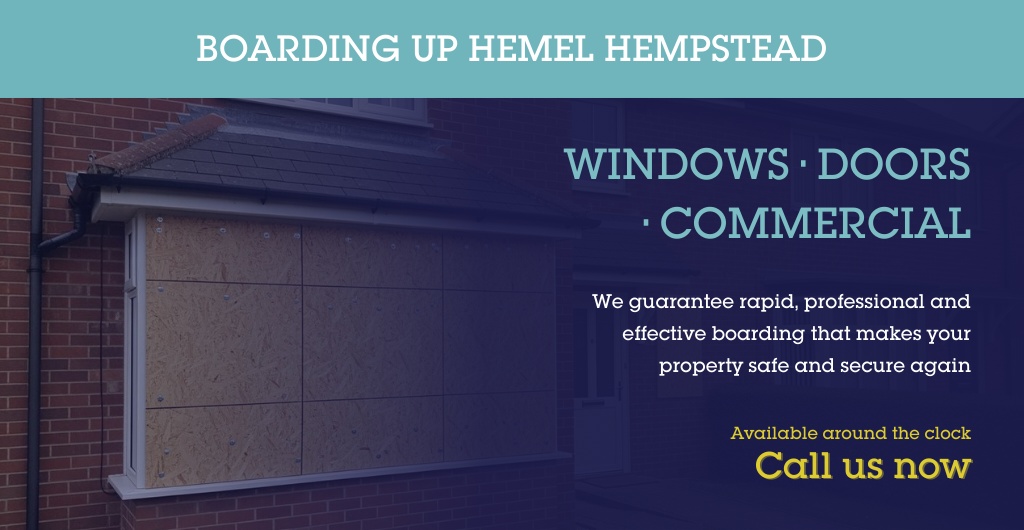
Boarding up is the process of securing broken, missing, or vulnerable openings—most commonly windows, doors, and shopfront glazing—using correctly fixed boards or purpose-made security systems. It’s used after a break-in, vandalism, storm damage, fire, or an accident to make safe the property quickly and reduce the risk of further damage or unauthorised entry.
At Boarding Up Hemel Hempstead, we provide boarding up services across the HP postcode area (HP1–HP27). We’ve been trading for 10+ years, we’re fully insured, and our technicians are DBS-checked. If you need urgent help tonight or out of hours, see our emergency boarding up page or call 01442 502 589.
Boarding up: what it means in practice (and what it isn’t)
“Boarding up” can mean a few different things depending on the damage and how long the building needs to stay secure.
In practical terms, boarding up usually involves:
- Measuring the opening and choosing the correct sheet material (commonly 18mm exterior-grade plywood, or OSB for smaller/less exposed areas)
- Fixing boards using methods that reduce the chance of removal from outside (for example coach bolts, anti-tamper fixings, or a non-destructive clamp system where appropriate)
- Making sharp edges safe and preventing further glass fall or wind-driven rain
- Leaving the property secure until glazing/repairs can be completed
What boarding up is not:
- A permanent repair (it’s a security and safety measure)
- A replacement for structural building work if frames/walls are severely damaged
- Fire restoration or smoke/odour remediation after a fire (we secure the building—see fire damage for what we can and can’t do)
If you’re unsure what you need, we’ll talk it through on the phone and explain options before we start work—especially if the frame is too damaged for non-destructive methods.
When is boarding up needed?
Most people search for boarding up when something has just gone wrong and they need the property safe quickly. Common scenarios we attend across Hemel Hempstead and nearby HP areas include:
- Smashed window after a break-in or attempted break-in
- Board up broken window after vandalism or accidental damage
- Board up door following forced entry (locks torn out, panels kicked in)
- Shopfront boarded up after an impact or damage to commercial glazing
- Storm damage where a window has blown in, or roof openings are exposed
- Post-fire situations where glazing/doors are compromised and the site must be secured
If the issue is happening right now, use our 24/7 boarding up service. If it’s planned (for example, a vacant property between tenancies), we can recommend longer-term options like temporary steel doors or security screens.
For event-specific guidance, you may also find these pages helpful:
- burglary repairs and boarding
- vandalism repair and boarding up
- storm damage boarding
- accident damage securing
What gets boarded up (windows, doors, shopfronts, roofs)
Boarding up can be applied to almost any opening, but the approach changes depending on the location, height, and condition of the surrounding frame.
Window boarding (domestic and commercial)
Window boarding is the most common call-out. A single broken pane can leave a property exposed to theft, weather damage, and injury from loose glass.
A proper temporary boarding solution considers:
- Whether glass is still in the frame (and the risk of it falling)
- The strength of the remaining frame (timber, uPVC, metal)
- Whether the window is at street level (higher risk) or sheltered
- Ventilation needs (particularly after flood damage or where drying is required)
Learn more about our dedicated window boarding in Hemel Hempstead service.
Door boarding and forced-entry security
When a door has been forced, it’s rarely just “a broken lock”. Frames can split, hinges can fail, and the door leaf may be unsafe to close at all.
Depending on the damage, we may:
- Board over a compromised door opening to secure property access
- Fit a stronger temporary solution for repeated access needs
- Recommend a temporary steel door where the building will be unattended or the door is beyond short-term repair
See door boarding for how this typically works.
Shopfront boarding for commercial glazing
A damaged shopfront needs to be handled quickly and neatly—especially if the premises are on a busy parade and you need to protect stock overnight.
Commercial boarding is usually larger-format, fixed with security in mind, and carried out with public safety as a priority (sharp glass management, pedestrian risk, and preventing further collapse of glazing).
Read about shopfront boarding for retail and commercial properties.
Roof and skylight boarding
Roof openings and damaged skylights are often about weatherproofing as much as security. Access, height, and safety are key—sometimes we can board from inside; other times the opening requires careful external access planning.
If you have a hole in the roof or an exposed skylight, see roof boarding for what we do and what to expect.
Materials and methods: plywood, OSB, and anti-tamper fixings
Not all boards (or fixings) are equal. The goal is to secure the opening without creating extra damage—and to leave a result that can be removed later by glaziers/builders when repairs are ready.
Plywood vs OSB: what’s the difference?
- 18mm exterior-grade plywood is often the best choice for larger openings, exposed locations, or where strength matters most. It handles fixings well and is less prone to breaking under impact.
- OSB (often 12mm) can be appropriate for smaller openings, short-term solutions, or sheltered areas. It’s cost-effective but typically not as strong at the edges as plywood.
We’ll choose the most suitable option for your situation, rather than forcing a one-size-fits-all approach.
How boards are fixed (and why it matters)
The fixing method is what stops a board being peeled off from the outside.
Depending on the opening and frame condition, we may use:
- Through-bolting/coach bolts with internal battens to clamp boards securely
- Anti-tamper fixings where external removal risk is higher
- Non-destructive methods where we can avoid drilling into frames (useful for certain window types and for landlords trying to minimise repair costs)
If the surrounding frame is too damaged to hold fixings safely, we’ll explain that clearly and discuss alternatives (for example, a temporary steel door, or adjusting the fixing points to sound structure).
What happens when you call us (step-by-step)
When you’re dealing with a smashed window or a forced door, you usually want two things: someone who can arrive prepared, and a clear plan. Here’s what typically happens when you contact us.
-
We take details over the phone
We’ll ask what’s been damaged (window/door/shopfront/roof), whether the property is occupied, and whether there are any safety concerns. -
We give you a realistic ETA
We don’t promise fixed arrival times—traffic, weather, and workload vary—but we prioritise urgent cases and tell you what’s realistic at the time you call. -
Arrival and safety check
We’ll assess the opening, any loose glass, and the condition of the surrounding frame. If police are attending or have attended, we’ll work around the scene as needed. -
Boarding up / making safe
We measure, cut, and fix boards to suit the opening. For commercial sites, we keep the finish tidy and security-focused. -
Documentation
Customers often need paperwork for landlords or insurers. We can provide an itemised invoice and a work statement, and we can take time-stamped photos where appropriate.
If you’re dealing with an insurer, our insurance claims guidance page explains what to keep and what’s usually helpful.
What you get (beyond “a board on the window”)
A good boarding-up job is about more than covering a hole. You should expect:
- A properly secured opening designed to resist removal
- Advice on the next steps (glazier, locksmith, longer-term security)
- A clear description of what was done and what materials were used
- Paperwork suitable for landlords, managing agents, and insurers
- A straightforward explanation if the opening is too damaged for a standard approach
If you want to understand likely costs and what affects pricing, see boarding up pricing (we don’t publish fixed prices because every job is different).
Boarding up for different property types
Boarding up varies depending on how the building is used—and how quickly access is needed again.
- Residential properties: The focus is immediate safety, privacy, and preventing repeat entry. See residential boarding up.
- Commercial properties: Often out of hours, with larger openings and higher risk of repeat attempts—plus the need to keep sites compliant and safe. See commercial boarding up.
- Vacant/void properties: Boarding may need to last longer, and stronger options can be more appropriate than basic timber. See vacant property security.
If you’re managing multiple sites, we can also discuss planned security and maintenance approaches.
Is boarding up covered by insurance?
Often, yes—but policies vary. Many insurers will accept emergency measures taken to prevent further loss (like boarding up after a burglary, vandalism, storm damage, or fire). They typically expect you to act reasonably to secure property and reduce ongoing damage.
What helps your claim:
- Your crime reference number (if applicable)
- Photos of the damage (only if safe to take them)
- A clear invoice and description of emergency works
- Any correspondence from police or the fire service if relevant
We’re not loss adjusters and can’t confirm cover under your policy, but we can provide the documentation insurers commonly ask for. For practical steps, visit insurance claims.
FAQs: What is boarding up?
Is boarding up a permanent repair?
No. Boarding up is temporary boarding designed to secure and make safe an opening until permanent repairs (glazing, door replacement, frame repairs) are completed.
Can you board up a broken window without damaging the frame?
Often, yes. Where the frame is sound and the opening allows it, we may use methods that reduce additional damage. If the frame is already split or unstable, we’ll explain the safest fixing options before proceeding.
What board do you use for boarding up?
Commonly 18mm exterior-grade plywood for strength and durability. In some situations we may use OSB (often 12mm) for smaller openings. The choice depends on exposure, opening size, and security risk.
How long does boarding up take?
It depends on the size and number of openings, access, and how damaged the surrounding frame is. A straightforward “board up broken window” job can be relatively quick; shopfronts, multiple windows, or unstable frames can take longer.
Can you board up a door after a break-in?
Yes. If you need to board up door access after forced entry, we can secure it in a way that reduces the risk of repeat entry. If you need reliable access for repairs or tenancy, we may recommend a more robust temporary option—see door boarding.
Do you offer out of hours boarding up in Hemel Hempstead?
Yes. We provide out of hours help across Hemel Hempstead and HP postcodes—see 24 hour emergency boarding up in Hemel Hempstead. We’ll give you a realistic ETA when you call.
Will boarding up stop rain coming in?
Boarding up can significantly reduce wind-driven rain entering through broken glazing, but it’s not the same as a sealed, glazed unit. For roof openings in particular, the goal is to make safe and reduce water ingress until proper roof repairs are arranged—see roof boarding.
What if the opening is too damaged to secure?
If the surrounding frame or wall is unstable, standard boarding may not be safe or effective. We’ll talk you through what we can do immediately and what needs a builder or other trade. We won’t carry out a “quick fix” that doesn’t actually secure the property.
Next steps
If you need emergency boarding up in Hemel Hempstead or anywhere across HP1–HP27—whether it’s a smashed window, a shopfront boarded up, or you need to make safe after damage—call and we’ll advise you.
Ready to get started? Call 01442 502 589 or email us for a free, no-obligation quote.
